Navigating the Business App Dilemma:
A B2B Guide to Custom Apps vs. SaaS*
|
|
|
|
Every expanding business eventually hits a technological wall. It starts simply: a generic website builder, a separate CRM subscription, and a standalone tool for scheduling.
|
|
|
|
But as you scale, your unique operations outgrow these rigid boxes. Suddenly, your off-the-shelf tools stop talking to each other. Your team becomes “human middleware” by wasting hours manually copying data between systems, untangling logins, and risking dropped balls daily. You face an escalating monthly tax in subscription fees for software that forces you to change how you work just to fit its limitations.
The solution isn’t another subscription; it’s building an integrated ecosystem. By transitioning to custom application development, you eliminate manual workarounds, automate your exact workflows, and turn your technology into proprietary corporate property, creating a high-value asset on your balance sheet.
*SaaS = Software as a service
|
|
|
|
Struggling to scale past your
current software limitations?
|
|
|
|
Get an expert look at your workflows to see where automation can save you hours of manual work.
|
|
|
|
Ready-made platforms are incredibly attractive at first glance. The upfront cost is low, and deployment is instant. But there is a hidden catch: these tools are built for the masses, not for your specific business operations.
To make them work, you are often forced to twist your internal processes to fit the software’s rigid boundaries, rather than making the software fit your business. Furthermore, subscription fees scale aggressively as your team grows. What started out as a cheap monthly utility eventually turns into a massive, permanent line-item expense.
Custom software, by contrast, is built to match your exact operational blueprint. While the initial investment is higher, the final product becomes a proprietary asset.
You gain total control over your data, your user experience, and your workflow automation without a massive monthly penalty just for growing your headcount.
|
|
|
|
|
|
How “Frankenstein Software” Taxes Your Growth
|
| |
|
|
|
|
This operational friction rarely happens overnight; it happens gradually as you solve individual problems with isolated, ready-made tools. But as your transaction volume and team size increase, an invisible tax begins to drain your operations.
Because your platforms don’t share a single brain, your data becomes siloed. Your team is forced to act as the “human middleware” between disconnected systems by manually copying client names, double-checking schedules, and re-keying invoices.
This isn’t just an inefficiency; it’s a critical business bottleneck that leads to:
-
Operational Blindness: You can no longer get a single, accurate view of your profit margins or marketing ROI.
-
Skyrocketing Human Error: Missed follow-ups, delayed invoices, and unfulfilled promises become inevitable.
-
Fragile Infrastructure: You haven’t built a scalable company; you’ve built a house of cards that requires constant manual firefighting just to keep from collapsing under its own weight.
|
|
|
|
|
|
A Real-World Example: The Basecamp Evolution
|
| |
|
|
|
|
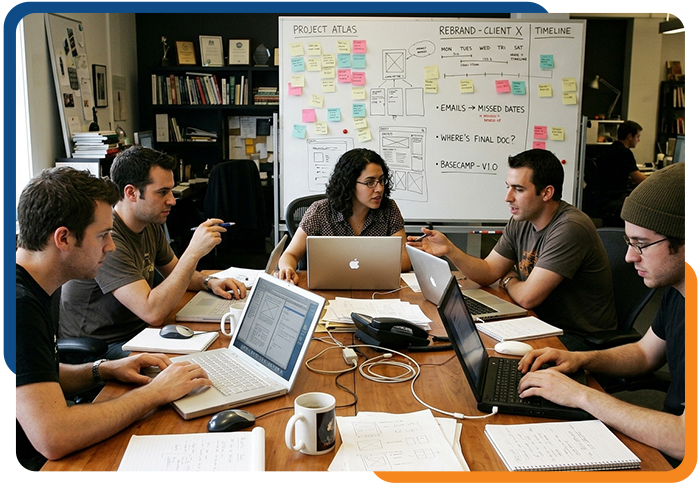
Before becoming a globally recognized project management tool, the creators of Basecamp ran a digital design agency. As the agency grew, they utilized a messy mix of standard tools to track client projects, share files, and manage timelines.
The scattered tools caused communication gaps, data silos, and delayed projects. When they searched for a solution, they found that no existing software on the market matched the specific workflow their team needed to deliver high-quality work.
Instead of compromising their process, they built a simple, custom internal application designed specifically for their agency’s unique steps. The tool completely cleared their operational bottlenecks. Eventually, it was so effective that they packaged it and sold it to the public, entirely transforming their business model from a service provider to a software powerhouse.
|
|
|
|
Not sure whether to keep paying subscription fees or invest in custom software?
|
|
|
|
Let’s map out your current systems and find the most cost-effective path forward.
|
|
|
|
|
|
Evaluating Your Needs:
Is It Time to Pivot?
|
| |
|
|
|
|
To decide between a subscription tool or a custom build, look at how a typical mid-sized company runs into the SaaS wall across three areas:
A. Protect Your Secret Sauce
If your workflow is your competitive advantage, generic software dilutes it. For example, if you win clients because of a highly specialized, four-step onboarding process, a standard CRM cannot track it properly. Custom software protects that competitive edge.
B. Eliminate Human Middleware
Look closely at your payroll to find the hidden labor cost of disconnected systems. If your team spends 15 hours a week manually copying customer data between your scheduling tool, invoicing system, and spreadsheets, that is over 700 hours of wasted labor every year.
C. Removing the Growth Tax
Compare a five-year horizon of subscription fees against a one-time development cost. A standard platform charging $50 per user looks cheap for a team of five. Scale that to a team of 40, and that tool climbs to $2,400 a month, which is $28,800 every single year. At that scale, owning your proprietary tool outright is the smarter financial move.
|
|
|
|
Want to run the numbers on your current software setup?
|
|
|
|
Discover the hidden gaps in your digital workflows and lead generation tracking.
|
|
|
|
Software should bend to the needs of your business, not the other way around. When off-the-shelf platforms begin restricting your growth, custom applications offer the path to true operational efficiency, higher team morale, and scalable value.
|
|
|
|
Built for Impact. Trusted by Industry Leaders.
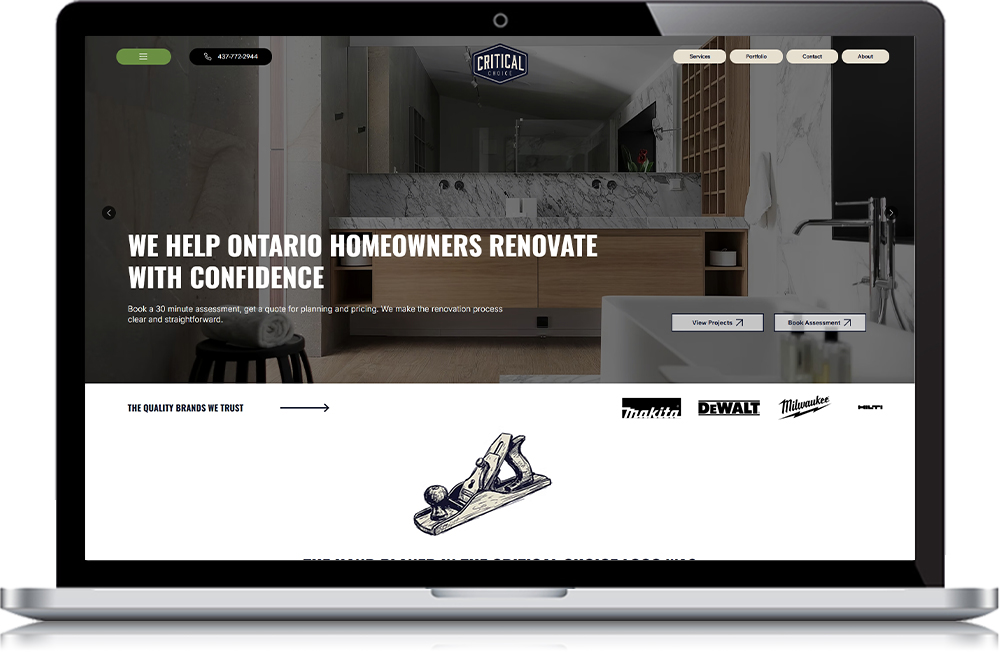
At DIT Web Solutions, we engineer custom applications that eliminate operational bottlenecks, automate manual workflows, and solve unique business challenges.
See the organizations that trust us to power their digital infrastructure:
|
|
|
|
At DIT Web Solutions, we bridge the gaps in your digital presence. Whether we are developing robust custom applications tailored to your exact operational blueprint, or engineering high-performing web and search marketing systems that fuel your pipeline, we ensure your technology drives growth.
|
|
|
|
Stop adapting your business to software limitations.
Let’s build what you atctually need.
|
|
|
|
| |
Toronto Office
86 Mac Ave., 2nd Flr.
Toronto, ON M1L 1M9
416.461.1143
See on Maps
|
|
|
Whitby Office
101 Brock St., 2nd Flr.
Whitby, ON L1N 4J9
905.209.9079
See on Maps
|
|
|
|
This email was sent to {{ contact.EMAIL }}.
You’ve received this email because you’ve subscribed to our newsletter.
|
|
|
|
|
|
|